A day as a product owner – between parcel delivery drivers, backlogs, and gut feelings
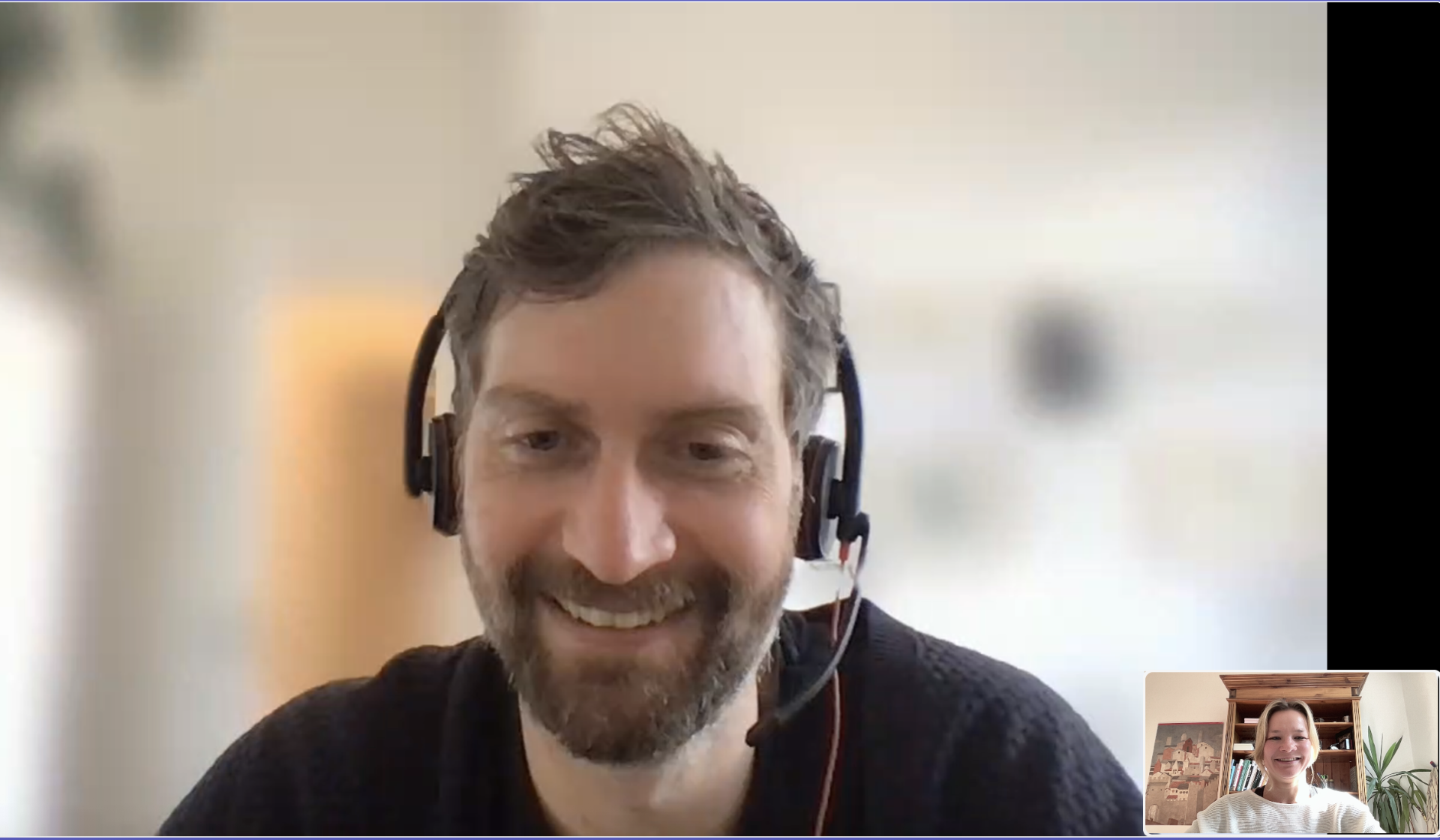
1 p.m. is parcel time. Thomas knows that very well by now. Because when the parcel delivery person rings the doorbell, he is usually there—in his home office, in this intermediate world of video calls, digital boards, and real life. “I’m kind of the parcel collection point for the whole building,” he says and laughs. It’s one of those little sentences that reveal more about the reality of agile working than any PowerPoint slide.
That’s how a product owner’s day begins at our company: not with buzzwords or business plans, but with people who deliver results. And that’s what his job is really about—things that truly resonate with others and deliver value.
From film to function: How to find the right path without a plan
Thomas isn’t someone who knew at the age of five that he wanted to be a product owner (who does?). His path is a mosaic: computer science, film, advertising, Scrum Master – and then, at some point, the role of product owner. “I never really knew what I wanted to be,” he says. “And I probably still don’t know.”
This sentence does not sound like uncertainty, but rather openness. “I always looked to see where I could help. Where I could add value.” This is typical of Thomas: calm, unemotional—and yet it encapsulates everything that agile work is all about.
Because our product owner doesn’t sort colorful cards on a board, but looks up and senses where his work really makes a difference—in the product, in the team, with the customer.
Between focus and feedback
Before the workday really gets going, Thomas takes a few minutes in the morning to get himself organized. No fancy morning ritual, no bullet journal. Just a moment to ask himself: What’s important today? Then he meets with Daniel, the Scrum Master. “We have our own daily meeting—it only lasts 15 minutes. I think it’s really important that we briefly discuss what everyone’s focusing on today.”
At 9:45 a.m., it’s time for the team daily. Thomas is there—but not too loud. “I’m here to answer questions, not to take over the meeting,” he says. A sentence that shows that he really understands the agile craft. Because being a product owner doesn’t mean playing boss. It means opening up spaces, providing guidance, and listening.
When asked how he knows when his team is in flow, he doesn’t have to think long: “By the communication. When there’s a lot of talking, when we’re discussing things in chat, sending ideas back and forth, then I know it’s working. When it’s quiet, it’s not.” Agility, it becomes clear, is not measured in velocity, but in the density of conversation.
Agility is when you laugh anyway
Thomas once said that agility works for him when people talk to each other directly – “not about tools, not about processes, but simply: talk.” That sounds trivial, but it’s almost radical in an age when everyone tries to solve everything with tools. If something doesn’t work, it’s discussed. If a plan doesn’t work out, it’s changed. “The most important thing is to remain open and experiment,” he concludes. “In our complex world, that’s the only thing that works.”
And, of course, he also knows the other side: stakeholder management, the effort it takes to say no. “Sometimes it’s hard to say, ‘That doesn’t make sense. I don’t want the team to work on something that has no value.’” That’s perhaps the hardest part of his job: mediating between customer expectations and the team without losing sight of the big picture or his courage.
AI, coffee, and little escapes
Of course, we also talk about artificial intelligence. And Thomas has a wonderfully calm attitude toward it: “AI can help—but it doesn’t think for me.”
He uses them to make his work easier—emails, summaries, documentation. But decisions? He still makes those himself.
“AI takes care of the mindless work,” he says. “But sometimes that mindlessness is actually a good thing. Just filing stuff away, clearing your head.”
That’s the kind of statement you want to hear twice because it’s so true. Agility also means not having to perform constantly, but being allowed to take a breather now and then.
On calmness, rhythm, and the art of letting go
Scrum, says Thomas, has taught him a kind of calmness. “I used to think you always had to get everything right straight away. Now I know that we make new decisions every two weeks. And that gives me incredible peace of mind.”
This idea—that mistakes are not the end, but part of the process—runs like a quiet undertone through our conversation. Thomas would like to leave everyone who feels overwhelmed by the Scrum Guide and the comprehensive role of the product owner with one final thought: even a product owner is allowed to take a vacation! Planning doesn’t have to take eight hours; a team can do it in two. And then there’s still time for daily focus time, working on the backlog, and concentrated preparation meetings.
In the end, what remains is trust.
What message would he like to convey to readers? “Stay open-minded. Experiment. And talk. Really talk.”
Perhaps that is the simplest and most intelligent definition of agility there is.
And perhaps that is precisely why Thomas is the best proof that modern work has nothing to do with buzzwords—but rather with attitude.
And yes: at 1 p.m., the parcel delivery service will ring the doorbell again.
Agility, in concrete terms.
The interview was conducted by Josefine Walter, Agile Coach and Scrum Master at convivo.